For many Veterans, Service Members, and First Responders, the transition from high-intensity environments to civilian life can be a complex climb. At Warrior Golf Academy (WGA), we’ve found that the most effective "operations center" for health and recovery isn't always a clinic—it’s the golf course.
Golf is often seen as a game of leisure, but for those who have served, it is a strategic tool for holistic wellness. Here is why golf is the ultimate therapeutic outlet for our Military and First Responder community.
1. Tactical Mental Clarity and Stress Reduction
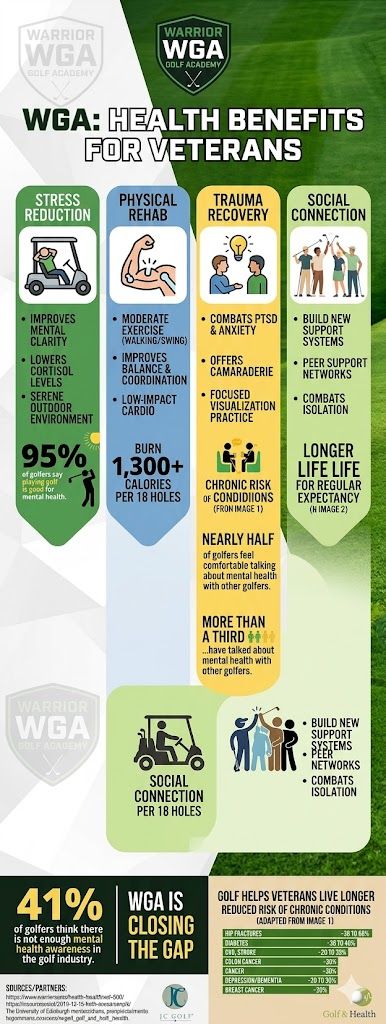
The "9-to-5" world rarely matches the pace of active duty, yet the stress of transition is real. Data shows that 95% of golfers believe the game is good for their mental health.
Golf requires a specific type of "quiet focus" that mimics mindfulness. When you are standing over a shot, the external noise disappears. This mental shift helps:
Lower Cortisol Levels: Spending 4–5 hours in a serene outdoor environment naturally reduces stress hormones.
Combat Anxiety: The repetitive, rhythmic nature of the swing provides a grounding effect similar to visualization techniques used in trauma therapy.
2. Physical Rehabilitation and Low-Impact Cardio
Service-connected injuries often make high-impact sports like running difficult. Golf offers a "stealth" workout that keeps you moving without the heavy toll on your joints.
Calorie Burn: Playing 18 holes and using a golf cart still burns roughly 1,300 calories. If you choose to walk the course, that number jumps to over 2,000 calories.
Reduced Risk of Chronic Disease: Regular play is associated with a 20–40% reduction in risk for conditions like Diabetes, Stroke, and heart disease. It also improves balance and coordination, which is vital for long-term musculoskeletal health.
3. A New Support Network: Replacing the Unit
The hardest part of leaving the Military or the force is the loss of the "tribe." Isolation is a significant risk factor for Veterans, but the golf course is a natural catalyst for social connection.
Nearly half of all golfers report feeling comfortable discussing mental health with their playing partners. At WGA, we leverage this camaraderie to build new support systems. Whether you’re a "crappy" golfer or a scratch player, the shared experience on the grass creates a bond that replaces the isolation of civilian life with the elite peer networks you’re used to.
4. Trauma Recovery and Longevity
The statistics don't lie: golfers live longer. Regular participation in the sport can increase life expectancy by up to 5 years. For those dealing with PTSD or trauma, the combination of social interaction, physical activity, and nature serves as a powerful multi-tool for recovery.
Warrior Golf Academy is dedicated to closing the gap in mental health awareness within the golf industry. We aren't just teaching you how to putt; we are giving you a mission-focused environment where you can heal, compete, and grow.
Join the Mission
Ready to get after it? Whether you need to dial in your "terminal ballistics" on the green or just need a solid crew to hang out with, WGA is here for you.
[Explore our Programs] or [Donate to Support our Heroes] today.