Beyond the Range: Why Golf is Emerging as Powerful Therapy for Military PTSD and Stress
There is an invisible shock that hits when a Service Member steps out of active duty or a First Responder finishes a grueling shift. In uniform, the human brain operates in a state of high-alert hyper-vigilance. You are conditioned to scan the environment, process high-stakes decisions instantly, and rely entirely on the absolute trust of the people standing to your left and right.
Then comes the quiet. It might be base downtime in a remote, isolated installation, or it might be the abrupt return to civilian life. That sudden silence can be deafening. The abrupt drop in adrenaline leaves a massive void, which is frequently filled by isolation, racing thoughts, and the heavy weight of operational stress.
The Wall Facing Traditional Clinical Settings
For years, the standard playbook for processing this kind of stress has lived entirely inside a sterile clinical office. While traditional counseling and talk therapy save lives, they simply do not work for every single person who wears the uniform.
In fact, many Veterans and Service Members fiercely resist conventional clinical settings. Sitting across a desk under fluorescent lights, being asked to unpack complex trauma on demand, can feel clinical, cold, and intensely isolating. For someone whose entire life was built on action, shared purpose, and forward momentum, sitting still in a quiet room often feels like being trapped in your own head. It forces you to stare directly at the problem without giving you an active way to release the pressure.
Finding Relief Beyond the Office
This is why the military community needs alternative solutions that match the way they are wired. Golf is proving to be one of the most powerful alternative therapies for military stress and a vital tool in combating PTSD.
When a Veteran or active-duty Service Member steps onto a driving range, the game immediately demands a different kind of focus. It requires physical mechanics, rhythm, balance, and precision. That absolute concentration acts as a circuit breaker for anxiety. Instead of looping on the heavy thoughts of yesterday, your entire mind and body have to lock into a single target and a single swing.
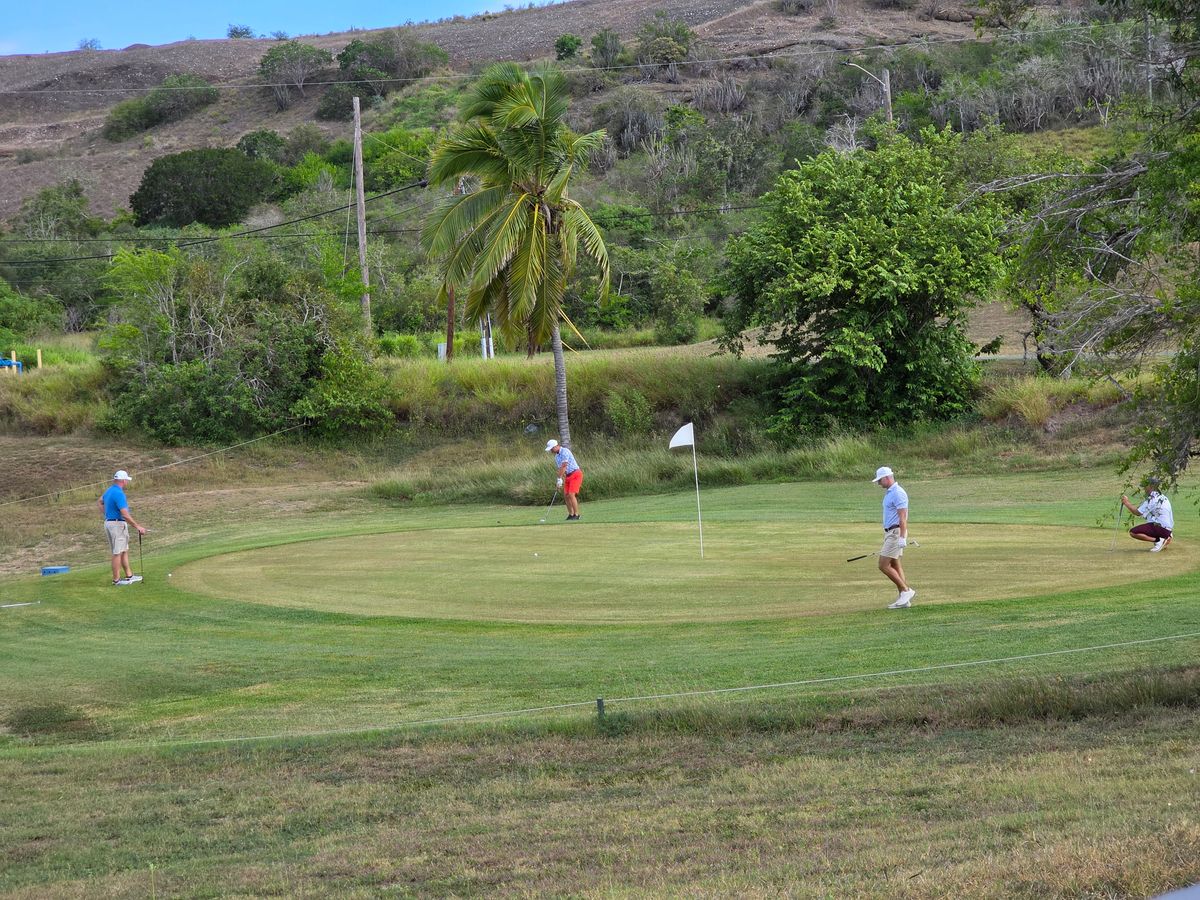
Combine that deep mental engagement with fresh air, wide-open green spaces, and low-impact physical movement, and you get a natural drop in cortisol levels. It is an active physical release that grounds the nervous system. The golf course stops being just a recreational hobby and becomes a dynamic, outdoor environment where healing happens organically, shot by shot.